Subscribe to Making Sense

No spam, no jargon. Unsubscribe anytime.
Makes Sense. You're subscribed to the AI signal for Canadian business leaders. Every two weeks. No hype, no jargon.
All issues Issue 13 · October 8 2026

Making Sense.

AI, translated for Canadian business leaders.

Editor's Note

AI has officially made it onto the ballot in BC. With Vancouver voting on October 17 and the province on October 24, data centres have gone from a zoning question to a campaign issue. No matter how the votes land, the way we power and host AI here is going to be one of the defining local questions for the next few years.

Late last month we also hosted a Happy Hour Conversation, and it was a great reminder of what AI adoption looks like on the ground. We learned from leaders across BC: particularly from Taymor Industries' André Lalande and Ben Guanzon on how they're transforming a 78-year-old manufacturer. Thank you to everyone who joined us in the room.

Read on for the full recap, Ottawa's latest AI moves, and a new Canadian AI partnership between Cohere, OpenText and TD. Enjoy!

In this issue
  1. 01
    Inside a Canadian manufacturer's AI plan.
    What Taymor Industries' President and IT director told BC leaders at our Happy Hour Conversation.
  2. 02
    Three stories from the past two weeks.
    AI data centres hit both BC ballots, Ottawa makes two AI moves, and Cohere builds a Canadian AI stack with OpenText and TD.
  3. 03
    Release Radar.
    Anthropic ships Opus 5.5 and Sonnet 5.5, OpenAI launches always-on agents, Microsoft previews permissioned agents in Copilot, and ChatGPT Ads comes to Shopify.
  4. 04
    Three numbers for your next meeting.
    How many companies are getting AI past the pilot stage, Anthropic's bet on AI talent, and what a BC mill town could earn from its data centre.
01 — In Focus 2 min read

Inside a Canadian manufacturer's AI plan.

André Lalande, Tyler Frans, and Ben Guanzon standing together beside a Sense & Motion banner at the Happy Hour Conversation in Burnaby
Taymor Industries' André Lalande, Sam's Tyler Frans, and Taymor Industries' Ben Guanzon at our Happy Hour Conversation in Burnaby.

This September, Sense & Motion hosted senior leaders from across British Columbia for a conversation with André Lalande, President of Taymor Industries, and Ben Guanzon, Taymor's Director of Information Technology, on preparing a 78-year-old manufacturer for AI. Rather than adopting AI tools right away, Taymor first invested in a data warehouse, so the information its sales team relies on would be fully accurate. Taymor then introduced Copilot to its managers ahead of a wider rollout, using their feedback to shape next steps, and every new initiative must be backed by a clear business case.

"This isn't about replacing people. This is about making them more effective and actually giving them a broader scope, broader vision."

André Lalande · President, Taymor Industries

Read the Full Recap →
02 — In The News

Three stories from the past two weeks.

AI data centres hit both BC ballots, Ottawa makes two AI moves, and Cohere builds a Canadian AI stack with OpenText and TD.

01

AI data centres are on the ballot in Vancouver and across BC.

A silhouetted hand dropping a ballot into a box

Hundreds of people marched from Mount Pleasant to downtown Vancouver on October 3 to oppose AI data centres, and organizers from No AI Vancouver invited city council candidates to join them. In July, city council put off a decision on rezoning land for a proposed AI data centre in Mount Pleasant, which earlier reports say Telus would operate, and asked city staff to run more public consultation first. That consultation won't begin until after the October 17 municipal election. Four council candidates from COPE, the Vancouver Greens and Bright Future who spoke to CBC said they support a pause or moratorium on large AI data centres, citing energy use, water supply and a lack of consultation.

The debate has reached the provincial campaign too: the B.C. Greens have proposed a province-wide moratorium on AI data centres as part of their platform for the October 24 election. Because consultation won't start until after the vote, the Mount Pleasant decision is likely to fall to the next council. For businesses counting on local, Canadian-owned compute, that makes this municipal election matter more than most.

Read more →
02

Ottawa's two AI moves this week: interns for SMEs and a new national council.

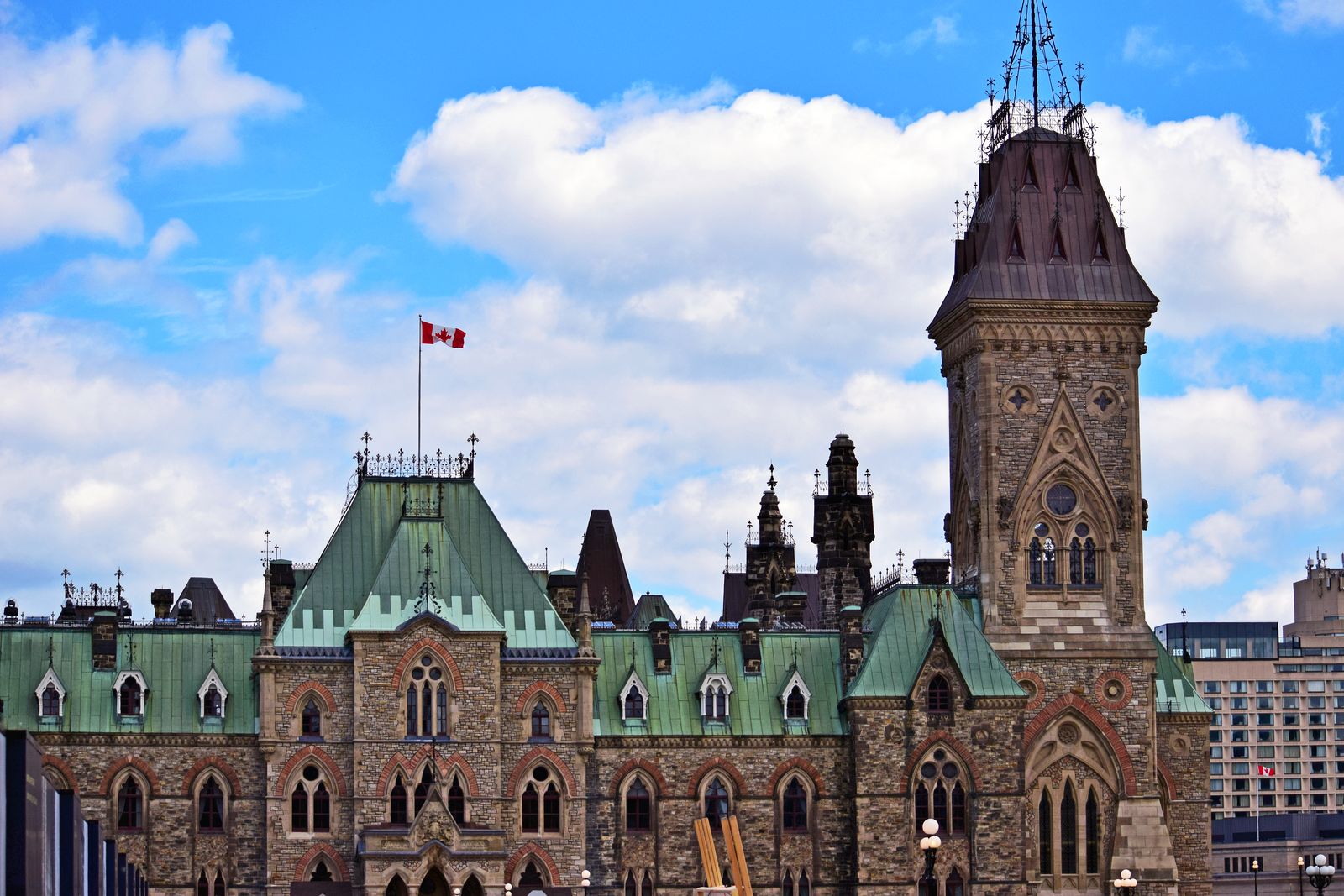
The Centre Block on Parliament Hill in Ottawa under a blue sky with a Canadian flag

AI Minister Evan Solomon announced up to $162 million over five years for Mitacs to co-fund 10,000 paid AI work placements, pairing students, recent grads and postdocs with Canadian businesses through its ADOPT and AI+X programs, with a focus on small and medium-sized companies. The placements are part of the national AI strategy's goal of up to 90,000 AI jobs and placements for young Canadians by 2031. Businesses of any size in Canada can apply as long as AI is central to the project, and placements go to students, recent graduates and postdocs at Canadian colleges and universities.

A week later, Prime Minister Mark Carney named a 13-member National Council on Artificial Intelligence to advise on how the strategy is rolled out, including how quickly businesses adopt AI, which Canadian AI companies to back, and where sovereign AI infrastructure gets built. Those decisions will shape future funding programs like this one and where new data centres land.

Read more →
03

Cohere is building a Canadian AI stack with OpenText and TD.

Two office workers at laptops in separate cubicles beside a window

Toronto-based Cohere and Waterloo-based OpenText announced at ALL IN that they will offer an AI agent product early next year to OpenText's roughly 120,000 enterprise clients, connecting Cohere's North platform and models to OpenText's data and content systems. Days later, TD committed up to $25 million over three years to a collaboration between its Layer 6 AI research centre and Cohere, focused on AI agents and better workflows.

Both deals target the same buyers: regulated industries and government, where it matters where data is stored and who controls it. Both deals build on Cohere's Canadian-built AI models. For organizations already running OpenText, a Canadian-built AI agent option may soon arrive through a vendor they already use.

Read more →
03 — Release Radar

Recent launches.

  • • Anthropic released Claude Opus 5.5 and Sonnet 5.5. Anthropic says Sonnet 5.5 costs up to 30% less per task than Sonnet 5 for most work.
  • • OpenAI launched Dots, always-on agents inside ChatGPT that work across connected apps like Slack and Teams, now rolling out to ChatGPT Pro and Business Premium users.
  • • Microsoft rebuilt Copilot as one app with Autopilot, a new type of agent that must carry its own explicit permissions. Autopilot is in early testing, and Microsoft has not set a date for general release.
  • • Shopify became OpenAI's first e-commerce partner for ChatGPT Ads, letting merchants run ads inside ChatGPT, but availability is limited to US merchants for now, and it isn't yet confirmed when Canadian merchants get access.
04 — Quick Facts

Three numbers for your next meeting.

  • • 13% of companies are on track with their AI initiatives. Nearly three-quarters report positive financial results from AI, but fewer than a third have moved beyond pilots. BearingPoint, via Reuters
  • • $100M is what Anthropic is putting into training 10,000 engineers to take AI from idea to production by the end of 2027. Anthropic
  • • About 3x more property tax would flow to Mackenzie, B.C. from its 80 MW AI data centre if the province taxed data centres as light industry instead of at retail rates. The Tyee