Subscribe to Making Sense

No spam, no jargon. Unsubscribe anytime.
Makes Sense. You're subscribed to the AI signal for Canadian business leaders. Every two weeks. No hype, no jargon.
All issues Issue 05 · June 4 2026

Making Sense.

AI, translated for Canadian business leaders.

Editor's Note

AI adoption in Canadian businesses has 4x'd over the past three years, and real productivity gains are starting to show (according to the Bank of Canada). The question stands: will you be one of the organizations harnessing that productivity, or will you belong to the large group stuck with AI pilots that aren't delivering ROI.

The crux is that adoption and results aren't the same thing. If you are buying Copilot licenses, handing them out, and waiting for a large payoff to arrive... you may be disappointed. The organizations that are surging forwards are the ones redesigning their work, and digging deep into their processes with the team.

This issue is about closing that gap, along with some notable local updates on the forefront of AI.

In this issue
  1. 01
    You bought the AI. Where are the results?
    Why buying licences isn't the same as getting results.
  2. 02
    Three Canadian AI stories from the past two weeks.
    The national AI strategy, BDC's warning on foreign capital, and BC's healthcare AI funding round.
  3. 03
    Recent launches.
    The launches from Cohere, Anthropic, Google, and SAP.
  4. 04
    Four numbers for your next meeting.
    Leading products, productivity gains, BC jobs, and federal funds.
01 — In Focus 3 min read

You bought the AI. Where are the results?

A leadership team meeting with laptops in a modern office
The firms pulling ahead are redesigning the work, not just buying the tools.
Professional Services AI ROI Productivity

Picture a Vancouver managing partner who signed off on a firm-wide AI rollout last year. The invoices are paid, most of the team has a login, and the question around the table now is what actually changed. For a lot of firms, the honest answer is: not much yet.

This is a problem many Canadian organizations are facing. KPMG Canada's head of AI research, Andrew Forde, told The Logic that many firms are buying licences, handing them out, and waiting for productivity that never shows, because the work never got reorganized. As Forde puts it, "when you make a worker more productive, you don't actually reduce jobs, you just create more work."

Taymor Industries, a 78-year-old Vancouver manufacturer, had started their AI journey but lacked a cohesive plan for action. In four months we mapped where the work actually slowed down, ran hands-on sessions with the team, and left them with a sequenced roadmap their leadership runs themselves. If you want to learn more about the clarity we built with their leadership team, spend 3 minutes reading the full story below.

"Sam gave us shared language for AI, surfaced opportunities we hadn't considered, and built a roadmap focused on generating business results. We came out of it with clarity on where to start and confidence in where we're headed."

Ben Guanzon · Taymor Industries


Read Taymor's Case Study
02 — In The News

Three Canadian AI stories from the past two weeks.

The national AI strategy, BDC's warning on foreign capital, and BC's healthcare AI funding round.

01

Canada's AI strategy has finally arrived.

Canada's Parliament Hill and the Peace Tower in Ottawa

This week, Canada unveiled its national AI strategy, titled "AI for All," organized around six pillars: protecting Canadians and safeguarding democracy, empowering Canadians, powering shared prosperity, building a sovereign AI foundation, scaling Canadian champions, and building trusted partnerships and global alliances. The most actionable piece for business leaders is what the strategy calls "AI Missions," national initiatives the federal government will fund and procure around one priority sector at a time. Healthcare is the first sector, followed by energy and natural resources, agriculture, transportation, manufacturing and robotics, and government services. The strategy also sets a national goal of lifting business AI adoption from 12% to 60% by 2034.

If you are interested in government funding for new AI projects, keep an eye on these initiatives. The provincial government is already funding healthcare projects in AI (more on that below), and opportunities in other sectors will emerge as the federal AI for All finds its footing.

Read more →
02

BDC warns Canada's AI startups lean too hard on foreign capital.

Financial district office towers viewed from below

A new BDC report has reframed Canada's startup funding gap as more than a capital-markets problem. In its Canada's Venture Capital Landscape 2026 report, BDC found that 80 to 90 percent of capital in late-stage financings ($50 million and above) now comes from foreign investors, and BDC Capital's Geneviève Bouthillier put it plainly: "this is now an economic sovereignty issue."

The sovereignty conversation around Canadian AI has mostly been about data residency and compute, and now BDC is adding capital ownership to that list.

Read more →
03

BC just put nearly $1.7M into four healthcare AI deployments.

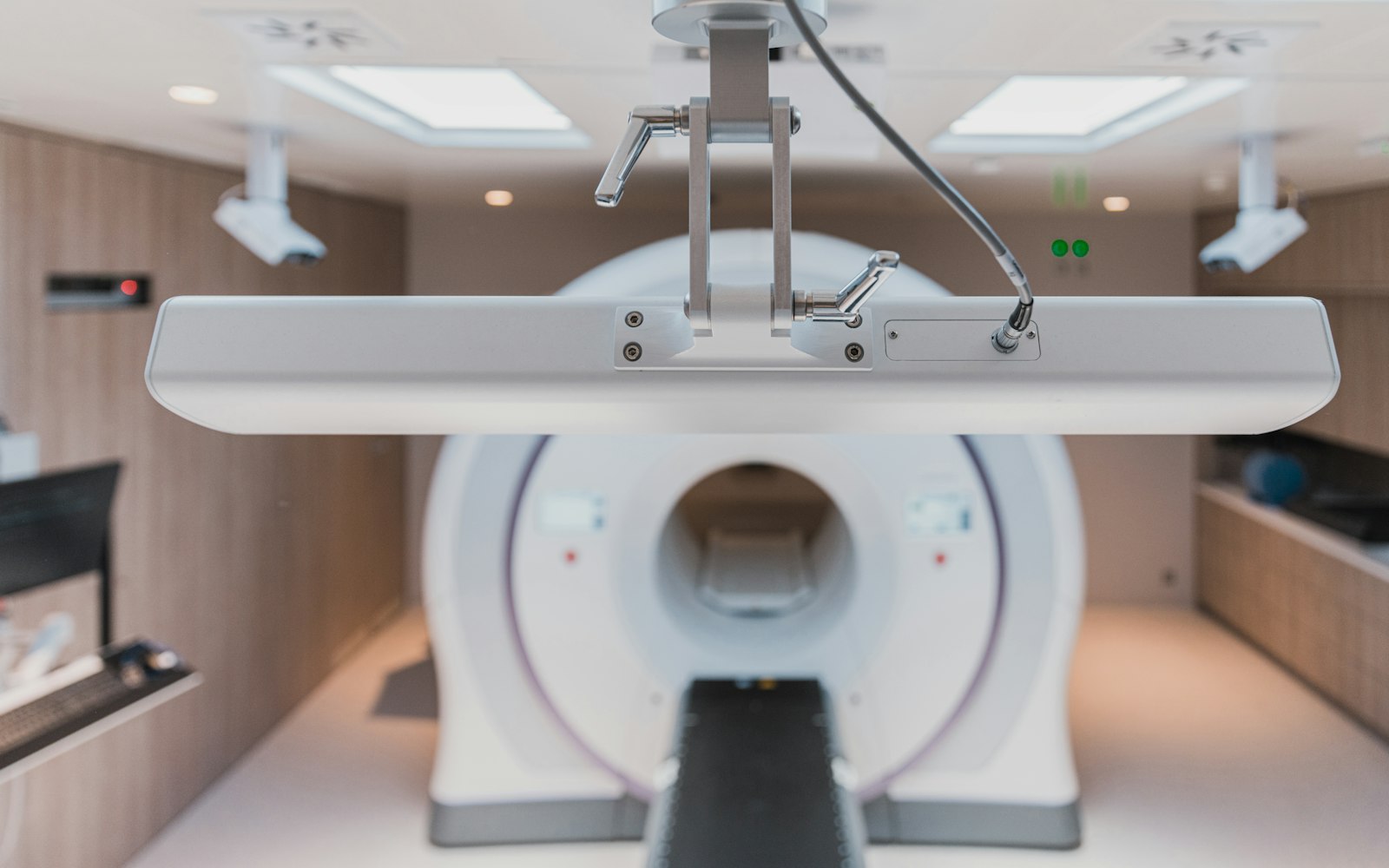
A contemporary hospital imaging suite with modern diagnostic equipment

In May, the BC government funded four concrete BC healthcare AI projects, each pairing a BC tech company with a BC public-sector partner. Richmond-based Ma Robot AI received $350,000 with Royal Columbian Hospital Foundation to bring AI navigation to robotic hospital porters. Victoria-based Quartech got $710,000 with Provincial Laboratory Medicine Services to automate quality checks in paediatric pathology. Sidney-based Quaternion Aerospace received $425,000 with Island Health to test autonomous drones for delivering medical supplies to remote BC communities. And Vancouver-based SapienSecure received $200,000 with Island Health to identify radiology billing errors with AI.

Four projects, four operational use cases, each one targeting a measurable workflow inside a BC institution with support from the BC government, ahead of the federal healthcare AI mission named in the strategy this week.

Read more →
03 — Release Radar

Recent launches.

  • Cohere released Command A+ as open source, putting a Canadian-headquartered model on the procurement shortlist for regulated buyers.
  • Anthropic shipped Claude Opus 4.8 with stronger coding, lower hallucination, and the same price as 4.7.
  • Alongside the launch of Gemini 3.5 Flash last month, Google I/O 2026 unveiled Gemini Spark, Omni, and many other tools. Read their full list for 100 things you may have missed.
  • SAP launched its Business AI Platform, a unified AI environment with the Autonomous Suite of 200+ agents across finance, supply chain, and HR.
04 — Quick Facts

Four numbers for your next meeting.

  • 34.4% of businesses now use Anthropic's Claude, narrowly ahead of OpenAI's 32.3%, which is the first time that Anthropic has led. Ramp AI Index
  • Organizations using AI well saw a 26% productivity gain in software development, and 14% in customer service. Stanford AI Index 2026
  • 525 permanent high-skill jobs, along with ~1,000 in construction, will be added by Telus's BC AI cluster. BetaKit
  • $66M of Canada's $300M AI Compute Access Fund has now been deployed to 44 projects, with $234M still uncommitted. Government of Canada
The Latest At SAM

A new member to the Sense & Motion team

A professional headshot of Bridget Keenan
Bridget Keenan
Sales & Marketing Coordinator

Bridget brings marketing, events, and stakeholder communications experience to the SAM team. She joins from the Greater Vancouver Board of Trade and holds a 2025 BBA in Marketing from Simon Fraser University. If you're reading something you like on our website, newsletter, or in one of our articles over the coming months, there's a good chance that Bridget had a hand in it!