
Subscribe to Making Sense

No spam, no jargon. Unsubscribe anytime.
Makes Sense. You're subscribed to the AI signal for Canadian business leaders. Every two weeks. No hype, no jargon.
All issues Issue 08 · July 16, 2026

Making Sense.

AI, translated for Canadian business leaders.

Editor's Note

It's an exciting time to be a Canadian in the AI ecosystem. While debates about data centres rage on, the country as a whole is continuing to make meaningful progress in leveraging AI. We're seeing agreements between provinces, new coalitions of companies, open-sourced tooling, and the backing of large AI projects within the natural resources sector. Now that there's a clear national strategy and infrastructure being put in place, it feels like everyone can focus on how to get tactical about activating AI together.

Amidst summer vacations and taking time with our families, the Sam team has been working away at projects here in BC to further this buildout, and are kicking off a new event series to help local organizations learn from one another. We look forward to sharing more about this exciting work in future editions.

In this issue
  1. 01
    AI partnerships across Canada.
    The groundwork for the AI build-out is being set, and bonds are being formed between organizations to tackle it together.
  2. 02
    Three stories from the past two weeks.
    Vancouver weighs a pause on data centres, AI goes to work on BC's mines and the land around them, and a new Canadian tool arrives for catching bias in AI.
  3. 03
    Release Radar.
    Anthropic opens Claude to US teachers, OpenAI ships the GPT-5.6 family, and both labs push their agents from answering questions to finishing the work.
  4. 04
    Four numbers for your next meeting.
    What Anthropic is putting into Canadian research, how many organizations are seeing gains, how far Canadian adoption has gone, and whether it is paying off yet.
01 — Feature 3 min read

AI Partnerships Across Canada

The Canadian flag flying atop Vancouver City Hall against a clear blue sky

In a crowded and fast-moving AI market, the instinct is to get ahead by out-building everyone else. This month, several Canadian organizations bet the other way and worked together instead.

Alberta and Québec recently signed a five-year agreement to share AI strategies, governance and training materials (and where it makes sense, source code and documentation). It's come a week after Alberta published the Velocity White Papers, technical papers and code under an open source licence based on 18 months spent rebuilding their own systems. Alberta's reasoning was simple: every government is stuck with the same aging systems, and sharing the fix spares each one from solving the same problem alone.

In early July, the private sector moved in the same direction. Scotiabank, Sun Life, and Telus joined Toronto's Lightworks to launch The AI Consortium. Rather than each build their own governance tools and infrastructure, they are pooling engineering talent and sharing the intellectual property that results. Their first project, an Agentic Control Plane, will help members see and manage how AI agents are deployed across their organizations. Canadian competitors have done this before. In 1984, Scotiabank was one of five competitor institutions that founded Interac, a collaboration that built a national payment network the whole country still runs on. When organizations pool their efforts this way, they build infrastructure none of them could manage alone, and everyday Canadians benefit from it.

While not all AI gets built in the open (plenty of it stays behind closed doors as a competitive edge), there's a historical Canadian pattern of cooperation. When the problem is bigger than any single player, we tend to build the answer together. Before your team scopes its next AI build, ask what problems may have already been solved. Starting from a method someone has proven beats starting from a blank page. If you can't find what you're looking for, or need help turning it into action, Sense & Motion can help.

02 — In The News

Three stories from the past two weeks.

Vancouver weighs a pause on the data centre boom, AI goes to work on BC's mines, and a free Canadian tool arrives for catching bias in AI.

01

Vancouver considers whether to pause the data centre boom.

A sunny street scene in Vancouver's Chinatown with pedestrians and storefronts

We covered Vancouver's pushback on its planned AI data centres in previous issues, and it has now reached City Hall. The city is home to two of the three data centres Telus is building with the federal government and developer Westbank, as part of a cluster set to scale to more than 150 megawatts by 2032. When we last wrote about this, hundreds had marched on City Hall in late June. Now, organizers have a further rally planned for July 26.

To address this, Councillor Lucy Maloney has raised a motion, "Addressing the Risks of Digital Infrastructure," which went to the Standing Committee on City Finance and Services on July 15. It directs staff to report back on a public impact requirement covering water, emissions, noise, and heat, as well as a data-centre-specific business licence requiring annual disclosure of water and power use, and options for securing community benefit. The pause is a matter of sequencing, since the motion asks for the above work to happen before Council rezones 111 East 5th Avenue or permits 150 West Georgia.

Underneath the politics, BC also has a physical constraint. BC Hydro is running a competitive process that caps data centre power at 300 megawatts over two years, so projects here compete for electricity. In contrast, north of Edmonton, Meta broke ground last week on the country's largest data centre which will draw 1 gigawatt, which is ~60% the amount of power fuelling the entire city of Edmonton (and more than 6x what the entire Telus cluster is projected to need by 2032).

Read more →
02

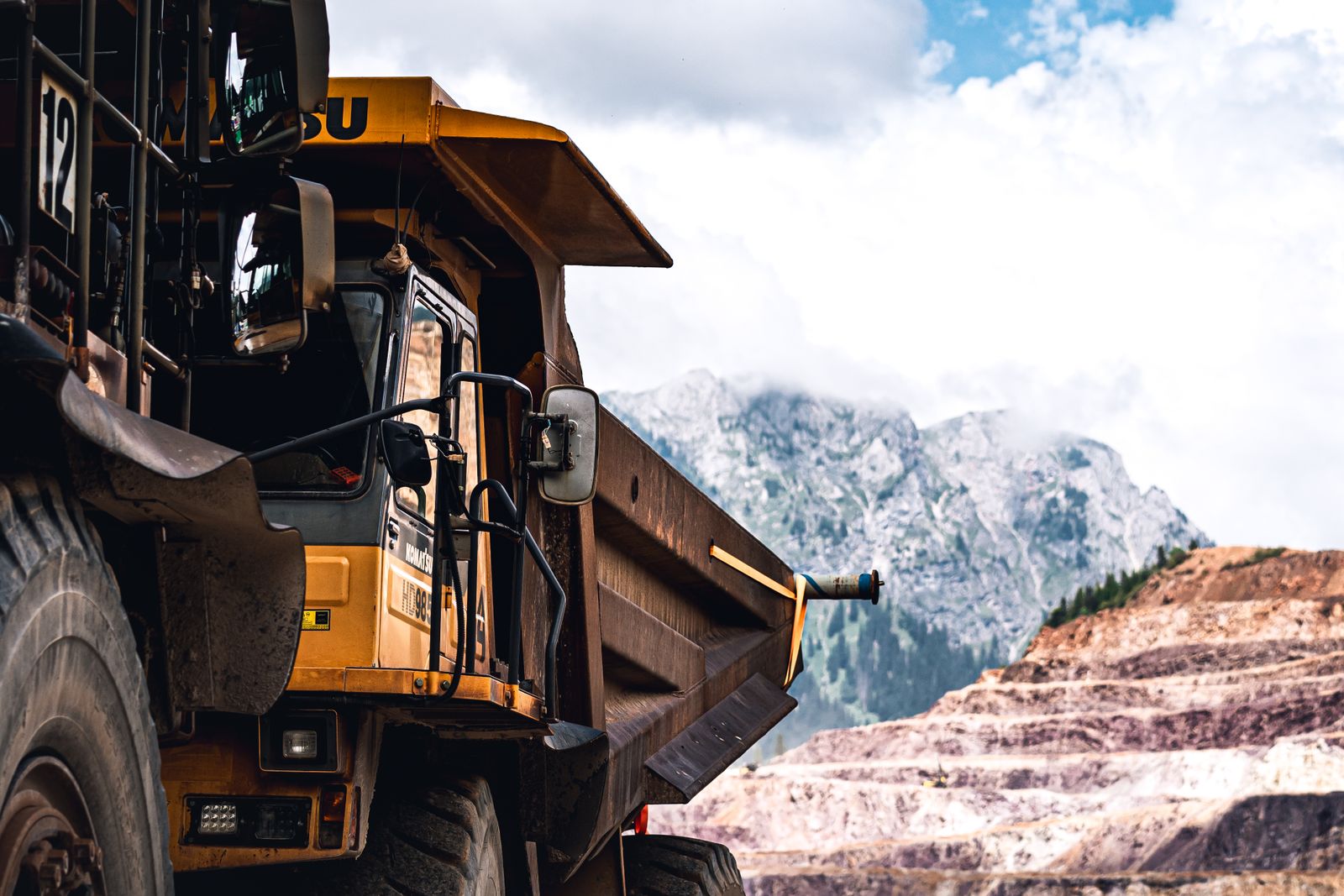
AI goes to work on BC's mines and the land around them.

A massive haul truck in a rugged mountain mining landscape

On July 9, DIGITAL, Canada's digital-technology innovation cluster, backed two mining projects worth $19.9 million, and one of them is led out of Vancouver. Koonkie Canada received $2.89 million for an AI system that tracks how well a mine site recovers once the work is done, by combining environmental DNA analysis, soil-health mapping, satellite sensing, and Indigenous ecological knowledge. Its partners expect it to shorten land-restoration timelines by five to ten years and cut costs by up to 40 percent. The second project, from Ontario's Novamera, uses subsurface imaging and AI-guided robotics to extract ore more precisely, cutting waste by as much as 90 percent.

This is AI adoption making heavy industry cleaner, cheaper, and less wasteful. Cutting up to a decade off a restoration timeline, up to 40 percent off costs, and as much as 90 percent less mining waste are not small efficiencies. They are the kind of gains that change what is economically and environmentally possible within the physical, resource-heavy work that much of this province runs on.

Read more →
03

A free Canadian tool for spotting bias in AI.

A diverse group of colleagues focused on a laptop together in a modern office

This month the Toronto-based Vector Institute released a free, open-source tool called UnBias-Plus, built to catch biased language in both ordinary writing and the data used to train AI models. It scans for bias around race, gender, age, and political framing, flags what it finds, explains why, and suggests more neutral wording. Since large language models learn from human-written text, they pick up human biases. When those quietly surface in things like hiring screens or clinical notes, they can cause real problems.

This is worth noting as AI starts making and shaping decisions about people. Bias in a model is not only an ethical issue, it is a legal and reputational one, and Canada's national AI strategy names it as a challenge. Now a free, open tool from a respected Canadian institute works to reduce that obstacle, meaning the ability to use AI responsibly is increasingly within reach of any organization.

Read more →
03 — Release Radar
  • Anthropic launched Claude for Teachers, giving verified K-12 educators free access to its paid features, teaching tools, and curriculum standards with teacher data kept out of model training. It is US only for now.
  • OpenAI shipped the GPT-5.6 family, in three sizes named Luna, Terra, and Sol. It leads on long-running agentic work, is priced below Anthropic's flagship, and is already the default model in Microsoft 365 Copilot.
  • Anthropic is bringing Claude Cowork to mobile and web, starting as a beta for Max subscribers. Cloud sessions mean a task you kick off keeps working after you close your laptop, and scheduled jobs can run with no device online at all, though some local files still need the desktop app open.
  • OpenAI answered Anthropic's update with ChatGPT Work, an agentic version of ChatGPT powered by GPT-5.6 that gathers information across your apps and files to produce finished sheets, slides, and docs. OpenAI says Codex and ChatGPT Work together passed 8 million active users as of July 14.
04 — Quick Facts
  • Anthropic committed $10 million in credits to Canadian AI research, at $1 million each to eight institutions so far, including Amii, Mila, Vector, CHEO, and CAMH. BetaKit
  • Two-thirds of organizations are reporting productivity and efficiency gains from enterprise AI, in Deloitte's 2026 survey of more than 3,200 leaders worldwide. Deloitte
  • 77% of Canadian companies surveyed by KPMG this spring say they already use AI agents for at least some tasks. KPMG Canada
  • 90% of Canadian CEOs say they are embedding AI across their operations, but only 43% of AI initiatives have delivered the return they expected over the past two years. IBM Institute for Business Value