Subscribe to Making Sense

No spam, no jargon. Unsubscribe anytime.
Makes Sense. You're subscribed to the AI signal for Canadian business leaders. Every two weeks. No hype, no jargon.
All issues Issue 10 · August 13 2026

Making Sense.

AI, translated for Canadian business leaders.

Editor's Note

New research from Glean's Work AI Institute shows that workers estimate AI saves them 11 hours a week, but over 6 of those hours are lost to managing the very tools that help them. How much time do you think you're actually saving?

Just over half of Canadian professionals say their employer put its AI resources into the technology, while only 11% say the focus has been on building the skills to use it. This leads to scenarios where new AI capabilities may be helping but their value isn't being maximized. The model can improve, while your outcomes don't change until you instill the right mindsets and capabilities to work effectively with the technology.

This issue is about closing that gap, alongside stories of AI unlocking new efficiency in Saskatchewan mines, Nvidia's $500 billion move to turn AI compute into a tradeable asset, and the EU transparency rules now in force for AI.

In this issue
  1. 01
    You're Not Saving as Much Time as You Think.
    Workers think AI is saving them 11 hours a week. More than half of that time is going right back into managing the tools, and the fix turns out to be a managerial skill, not a better model.
  2. 02
    Three stories from the past two weeks.
    Nvidia moves to turn AI chips into a $500 billion tradeable asset class, a Saskatchewan miner speeds up with a purpose-built AI tool, and the EU's AI Act transparency rules go live.
  3. 03
    Release Radar.
    Meta's own coding agent ships, DeepSeek ships its cheapest frontier-class model yet, Superwhisper and Cohere build an all-Canadian voice-to-text stack, and LinkedIn adds a button for flagging AI content.
  4. 04
    Four numbers for your next meeting.
    The gap between Canadian AI ambition and readiness, Claude Opus 5's benchmark lead, an Ottawa startup hitting $100 million in revenue, and Canadian VC funding's first early-year rebound since 2021.
01 — Feature 3 min read

You're Not Saving as Much Time as You Think.

Two colleagues leaning over a computer screen together, talking through what is on it
Workers estimate AI saves them 11 hours a week. On average, 6.4 of those hours go straight back into managing the tools themselves.
AI Adoption Management Productivity

Ask people how much time AI saves them and the answer sounds great. Ask what they actually do with those hours, and more than half of it disappears into supplying context the tool didn't have, checking what came back, and cleaning up answers that read well but weren't right. A more capable model doesn't fix this. It just produces more, faster, while the two decisions that actually determine whether AI pays off still don't have an owner: what good output looks like, and who checks for it.

The gap shows up across the organization. Just over half of Canadian professionals say their employer poured its AI resources into the technology itself, while only 11% say the focus has been on developing people's skills to use it well. The fix isn't more capability. It's a managerial skill most organizations already have, and it's simpler than it sounds.

Read the full article
02 — In The News

Three stories from the past two weeks.

Nvidia moves to turn AI chips into a $500 billion tradeable asset class, a Saskatchewan miner speeds up its hunt for natural hydrogen with a purpose-built AI tool, and the EU's AI Act transparency rules go live for anyone selling into that market.

01

Nvidia turns AI compute into a $500 billion Wall Street asset class.

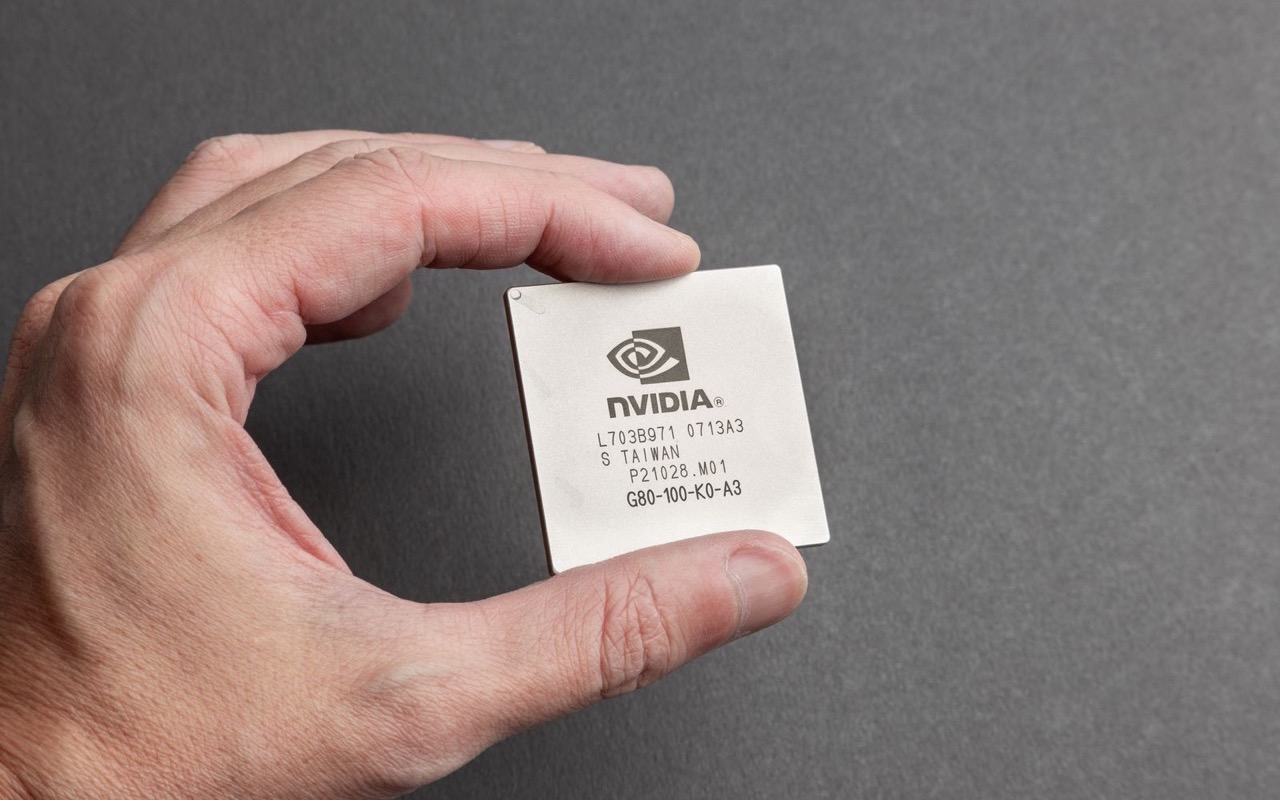
A hand holding an Nvidia graphics processing unit chip

Nvidia, the company that makes most of the specialized chips powering today's AI systems, announced a deal with a group of major financial firms, including Goldman Sachs and BlackRock, to raise more than $500 billion from investors to fund AI computing infrastructure. This deal aims to turn AI chips into a stable, tradeable financial asset, with BlackRock's CEO Larry Fink comparing the structure to the 1970s, when banks first bundled mortgages into a new kind of security investors could buy into.

Other analysts point to a different historical comparison, the 1870s railroad-bond boom, when a similar wave of borrowing to build infrastructure ended in a financial panic once the debt outpaced actual demand. That comparison reflects concern that Big Tech has already issued $194 billion in bonds this year to fund AI infrastructure, and rating agencies have flagged strained cash flow among the biggest spenders.

Read more →
02

A Saskatchewan miner is using AI to speed up the hunt for Canada's newest energy source.

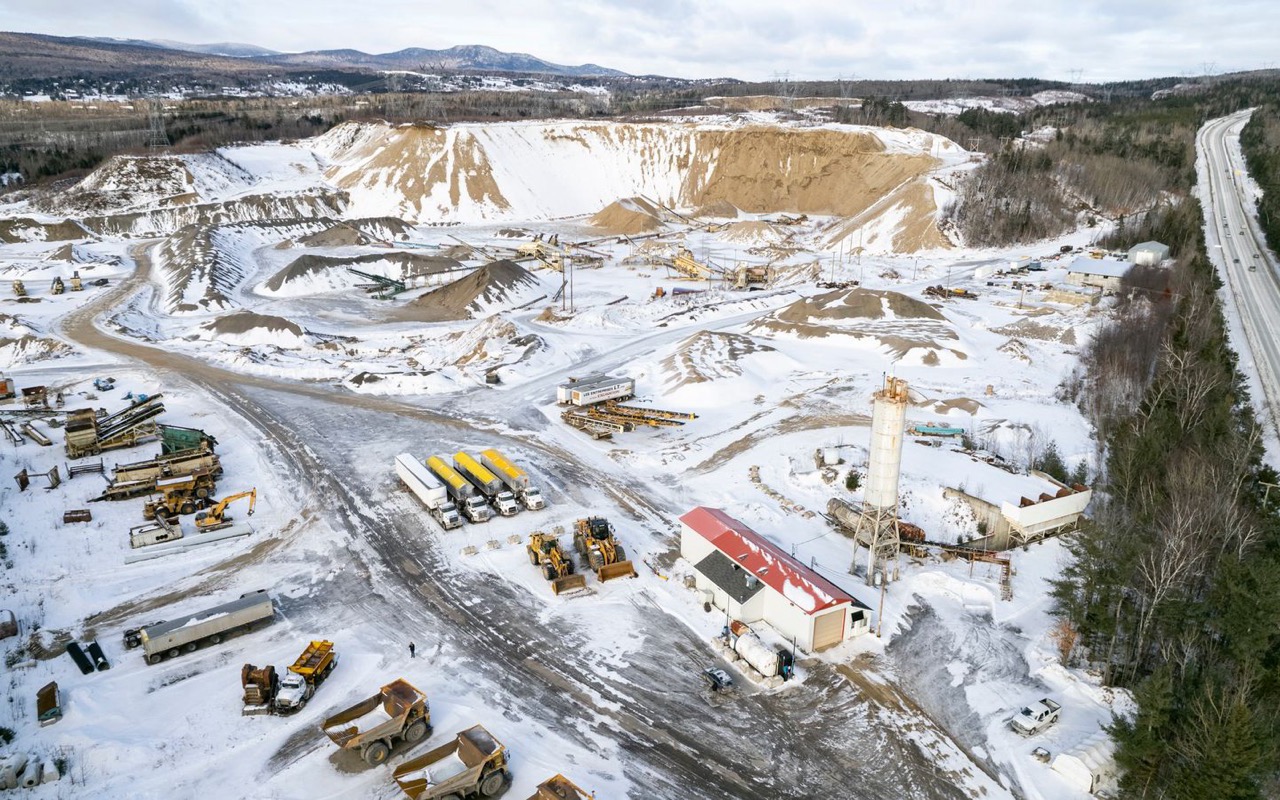
Aerial view of a snow-covered open-pit mine site in winter

Regina-based Max Power Mining discovered a large natural hydrogen deposit at its Lawson site in southern Saskatchewan late last year, drilling Canada's first natural hydrogen well. To speed up further exploration, the company built Maxx Lemi, a proprietary AI tool that processes large geological and geophysical datasets to flag promising drilling targets. Natural hydrogen occurs in underground rock formations and emits only water vapour when burned, unlike manufactured hydrogen, which needs expensive, emissions-heavy industrial production. Max Power says the goal is cutting traditional site-identification timelines by months or years, and it's already used the platform to identify several "lookalike" sites across the more than two million acres of permitted land it holds.

For BC's mining, forestry, and energy sectors, this is a useful example of AI aimed at one specific, expensive bottleneck rather than a broad rollout. Worth watching for any resource-sector organization sitting on large, underused geological or operational datasets of its own.

Read more →
03

The EU AI Act's transparency rules are now live, and BC exporters aren't exempt.

European Union flags flying outside the European Commission building in Brussels

On August 2, two new obligations under the EU AI Act took effect. AI-generated or AI-manipulated content published into the EU market now needs a machine-readable disclosure mark, chatbots and AI agents must identify themselves as automated, and deepfakes must be flagged (the European Commission published a standard icon set for the labels). At the same time, the EU's AI Office gained formal power to investigate and penalize the model-making labs directly, including OpenAI, Anthropic, and Google. Fines for either obligation run up to €15 million or 3% of global turnover.

The rules split responsibility two ways. If your business runs a customer-facing chatbot, whether you built the model or you're calling someone else's through an API, you're the "provider" of that AI system under the Act, and you're responsible for making sure customers know they're talking to AI. Separately, if you publish AI-generated text specifically to inform the public on a matter of public interest, you need to disclose that, though ordinary marketing copy that gets human review before publishing is explicitly exempt. Model providers like Anthropic carry their own separate obligation to mark generative outputs as AI-made, which is why Claude started embedding invisible watermarks in its text worldwide on August 2.

Read more →
03 — Release Radar

Recent launches.

  • Meta introduces Muse Code, its own AI coding agent that writes and debugs code for developers, paired with Muse Spark 1.2, the underlying model built specifically to power it.
  • DeepSeek ships V4-Flash-0731, MIT-licensed, with a 1-million-token context window, priced at $0.14/$0.28 per million tokens, the cheapest frontier-class pricing this cycle.
  • Toronto's Superwhisper partners with Cohere to add its Transcribe model to Superwhisper's dictation app, creating an all-Canadian voice-to-text stack that can run locally on a laptop or phone.
  • LinkedIn adds a "Seems Like AI Slop" button, letting members flag posts they suspect are AI-generated.
04 — Quick Facts

Four numbers for your next meeting.

  • Canadian tech leaders expect to have an average of 1,189 AI agents deployed by 2027, a 36% jump from today, but only 9% feel fully prepared for it. IBM Canada
  • Opus 5 leads Frontier-Bench v0.1 and scores 3x the next-best model on ARC-AGI 3, all at the same pricing as its predecessor, $5/$25 per million tokens. Anthropic
  • Ottawa-based AI startup Turbopuffer is on track to hit US$100 million in revenue this year with just 37 employees. The Logic
  • Canadian VC dollars deployed hit $2.69 billion CAD across 250 deals from January to July, a 17% increase over the same period last year, the first early-year increase since 2021. BetaKit